Product Categories:
Blog, Essential Oils
Wintergreen Oil: Benefits, Uses, Research & Safety Guide | Ooty Originals

Share:

Product Categories:














Authentic Nilgiri Products
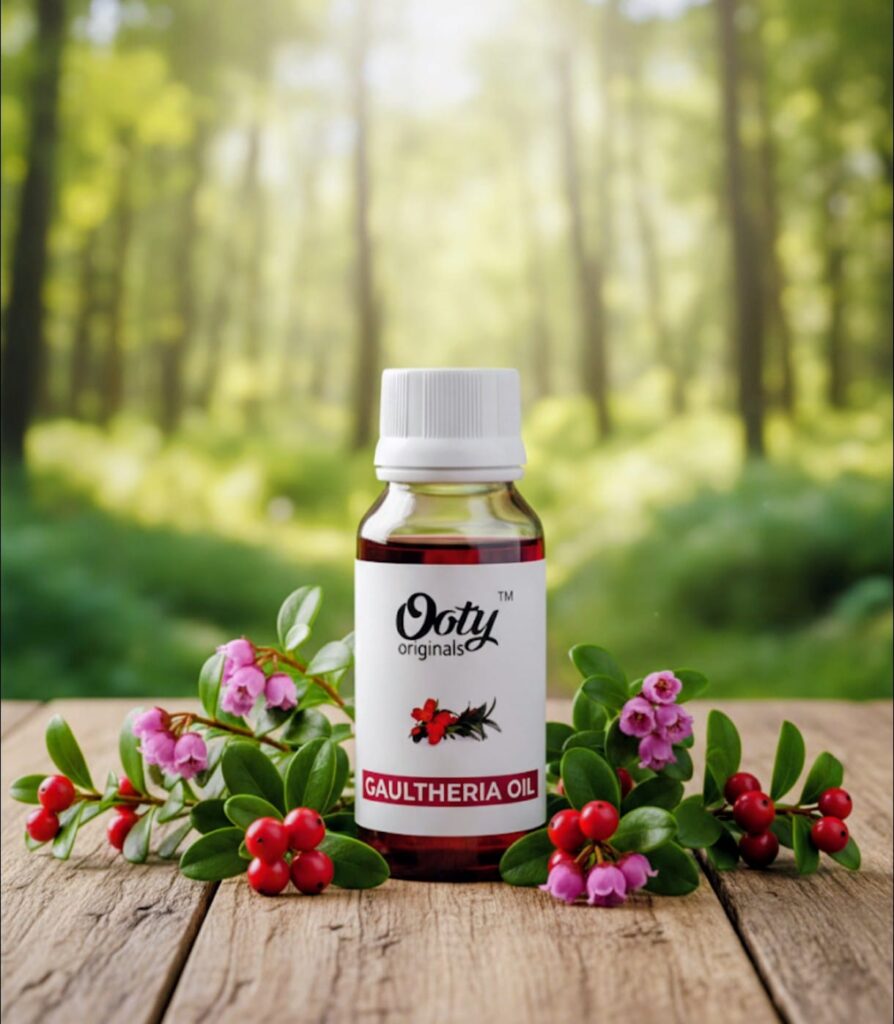
Extracted from the leaves of the wintergreen plant, this oil is naturally rich in methyl salicylate, a compound known for its cooling sensation and role in many muscle and joint care formulations. Wintergreen oil is a highly aromatic essential oil valued for its distinctive minty scent and traditional use in topical wellness products. Today, scientific research continues to investigate the biological properties of wintergreen essential oil, while emphasizing the importance of safe and responsible use due to its high concentration. At Ooty Originals, we believe in providing consumers with evidence-based information supported by modern research.
Wintergreen oil, sometimes referred to as winter green oil or wintermint oil, is an essential oil primarily obtained from the leaves of Gaultheria procumbens (Eastern Wintergreen) or related Gaultheria species. It is widely used in aromatherapy, massage blends, topical balms, and personal care products because of its refreshing fragrance and warming-cooling sensation.
Wintergreen leaves undergo fermentation before steam distillation, allowing naturally occurring compounds to convert into methyl salicylate. Proper harvesting, controlled fermentation, and careful distillation help preserve the oil’s purity and chemical consistency.
Wintergreen oil contains 95–99% methyl salicylate, along with trace amounts of organic acids and aromatic compounds.
Scientific mechanism: Methyl salicylate is converted in the body into salicylic acid, which influences inflammatory pathways by reducing prostaglandin production. This mechanism is well established pharmacologically.
Evidence: Human pharmacological research and clinical understanding support this mechanism, although studies specifically evaluating whole wintergreen essential oil remain limited.
Recent laboratory studies have demonstrated antioxidant and antimicrobial activity of wintergreen oil against selected microorganisms. Human research primarily focuses on methyl salicylate-containing topical products for temporary relief of minor muscle and joint discomfort rather than the essential oil alone.
Emerging research is also exploring sustainable extraction methods and improved analytical testing to detect adulteration. However, additional high-quality clinical trials are needed to establish broader therapeutic applications.
Current evidence suggests wintergreen oil may:
It should not be considered a treatment for chronic pain or medical conditions without professional guidance.
Traditionally, wintergreen oil has been used in massage, muscle rubs, and aromatherapy. Modern research supports its topical sensory effects largely due to methyl salicylate but offers limited evidence for many traditional claims beyond these applications.
The essential oils industry is increasingly adopting GC-MS testing, sustainable sourcing, and traceability systems to verify authenticity. Demand for naturally derived ingredients in sports recovery and wellness products continues to grow, alongside stronger quality and safety standards.
Choose wintergreen essential oil that is:
Because wintergreen oil is extremely concentrated:
Avoid use without medical advice if you are:
Due to its high methyl salicylate content, accidental ingestion can be toxic.
Responsible harvesting and ethical sourcing help protect wintergreen populations while maintaining oil quality. At Ooty Originals, we prioritize carefully selected botanical ingredients, quality-focused production, and rigorous purity standards to deliver authentic essential oils.
Ooty Originals offers premium wintergreen oil produced with a commitment to purity, authenticity, and quality. Our oils are carefully sourced, steam distilled, quality tested, and packaged to preserve their natural aroma and integrity.
Wintergreen oil remains one of the most distinctive essential oils due to its naturally high methyl salicylate content. Scientific evidence supports its use in topical wellness products for temporary muscle comfort, while laboratory studies continue to explore additional biological properties. As research evolves, safe use, proper dilution, and high-quality sourcing remain essential. Ooty Originals delivers premium wintergreen essential oil with a focus on purity, transparency, and responsible sourcing.
1. What is wintergreen oil used for?
Wintergreen oil is commonly used in massage oils, muscle balms, aromatherapy, and topical wellness products.
2. Is wintergreen essential oil safe to apply directly?
No. It should always be diluted with a suitable carrier oil before skin application.
3. Does wintergreen oil help with muscle discomfort?
Human evidence supports the topical effects of methyl salicylate-containing products for temporary relief of minor muscle discomfort, but evidence for the essential oil itself is more limited.
4. Why is wintergreen oil rich in methyl salicylate?
During fermentation and steam distillation, natural plant compounds are converted into methyl salicylate, which becomes the dominant active constituent.
5. How do I choose high-quality wintergreen oil?
Look for 100% pure, steam-distilled wintergreen essential oil that is GC-MS tested, properly labeled with its botanical name, and sourced from a trusted brand like Ooty Originals.