Product Categories:

Blog, Essential Oils
Eucalyptus Oil: Benefits, Uses, Research & Quality Guide | Ooty Originals

Share:

Product Categories:














Authentic Nilgiri Products
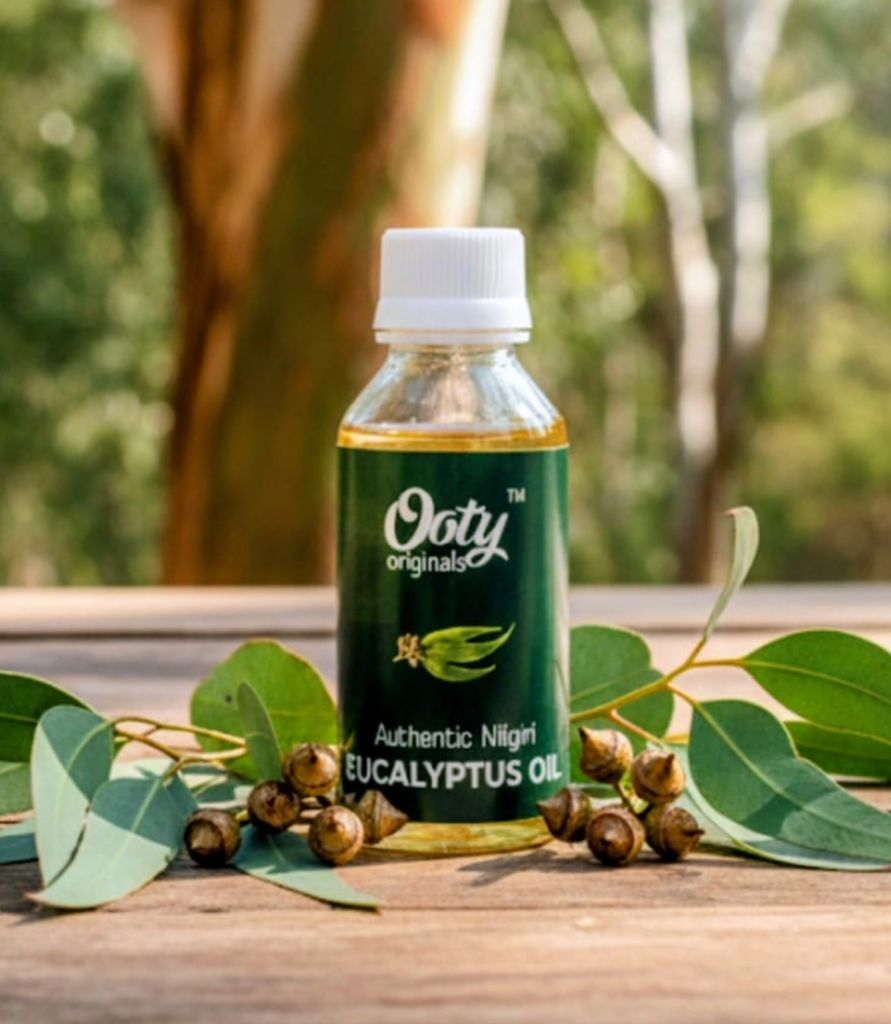
Commonly known as Nilgiri oil in India, it has a long history of traditional use for respiratory comfort, massage, and natural cleaning. Eucalyptus oil is one of the world’s most widely used essential oils, appreciated for its fresh, camphoraceous aroma and versatile applications in aromatherapy, personal care, and household products. Modern research has identified several bioactive compounds, particularly 1,8-cineole (eucalyptol), that contribute to its biological properties. While scientific studies support certain applications, many traditional uses require further clinical validation. At Ooty Originals, we focus on delivering premium eucalyptus oil backed by quality, purity, and evidence-based information.
Eucalyptus oil is an essential oil extracted primarily from the leaves of Eucalyptus globulus, though other Eucalyptus species are also commercially cultivated. It is widely used in diffusers, massage oils, balms, soaps, and natural home-care products. Consumers searching for eucalyptus use or eucalyptus oil price should prioritize purity, botanical authenticity, and quality testing over cost alone.
Fresh eucalyptus leaves are harvested and processed using steam distillation, the preferred extraction method for preserving volatile aromatic compounds. Environmental factors such as climate, soil, and harvesting stage influence the oil’s chemical profile and aroma.
The primary constituent of eucalyptus oil is 1,8-cineole (eucalyptol), typically comprising 60–85% of high-quality oil. Other naturally occurring compounds include α-pinene, limonene, p-cymene, and globulol.
Scientific mechanism: 1,8-cineole has demonstrated anti-inflammatory, antioxidant, and mucolytic (mucus-thinning) properties by influencing inflammatory mediators and supporting normal mucus clearance.
Evidence: Human clinical studies have investigated purified cineole for respiratory conditions, while laboratory and animal studies support additional biological activities. Research on whole eucalyptus essential oil remains more limited.
Recent studies have explored eucalyptus oil’s antimicrobial and antioxidant effects against selected bacteria and fungi under laboratory conditions. Clinical research involving 1,8-cineole suggests potential benefits in supporting respiratory comfort as an adjunct to standard medical care. Emerging research is also examining eucalyptus-derived compounds in oral care products, natural disinfectants, and eco-friendly formulations. However, additional high-quality human trials are needed for many proposed uses.
Current evidence suggests eucalyptus oil may:
Eucalyptus oil should not be considered a replacement for medical treatment.
Traditionally, Nilgiri oil has been used in steam inhalation, massage oils, and topical balms. Modern research supports some respiratory and antimicrobial properties, particularly for cineole, but many traditional health claims require further clinical confirmation.
Growing demand for natural wellness products has encouraged advancements in GC-MS purity testing, sustainable eucalyptus cultivation, and traceable sourcing. Manufacturers are also developing eco-friendly extraction techniques and incorporating eucalyptus oil into plant-based cleaning and personal care products.
Choose eucalyptus oil that is:
Dilute eucalyptus oil before topical application, perform a patch test, and avoid contact with eyes and mucous membranes. Use only recommended amounts in diffusers. Do not ingest unless directed by a qualified healthcare professional.
Consult a healthcare professional before use if you are pregnant, breastfeeding, have asthma or epilepsy, or intend to use eucalyptus oil on infants or young children. Individuals with known allergies to essential oils should use caution.
At Ooty Originals, we prioritize responsibly sourced eucalyptus leaves, sustainable production practices, and rigorous quality control. Careful steam distillation and proper storage help preserve the oil’s natural composition and freshness.
Ooty Originals offers premium eucalyptus oil crafted with purity, authenticity, and consistency in mind. Our oils are carefully sourced, steam distilled, and quality tested to provide consumers with a reliable essential oil suitable for aromatherapy and personal care.
Eucalyptus oil remains one of the best-researched essential oils, with encouraging evidence supporting its antimicrobial, antioxidant, and respiratory-related properties, particularly through its major constituent, 1,8-cineole. While laboratory and clinical research continues to expand, many traditional uses still require stronger human evidence. Choosing high-quality eucalyptus oil from Ooty Originals ensures authenticity, purity, and responsible sourcing for your everyday wellness routine.
1. What is eucalyptus oil used for?
Eucalyptus oil is commonly used in aromatherapy, massage oils, topical balms, diffusers, and natural household products.
2. Is Nilgiri oil the same as eucalyptus oil?
Yes. In India, eucalyptus oil is commonly known as Nilgiri oil, especially when derived from Eucalyptus globulus.
3. Can eucalyptus oil help with breathing comfort?
Human research on purified 1,8-cineole suggests it may support respiratory comfort as an adjunct to standard care. The essential oil itself should not replace medical treatment.
4. How should eucalyptus oil be used safely?
Always dilute before applying to the skin, avoid ingestion, and use only recommended amounts for aromatherapy.
5. What affects eucalyptus oil price?
The eucalyptus oil price depends on factors such as botanical species, cultivation practices, extraction method, purity, GC-MS testing, and overall product quality.